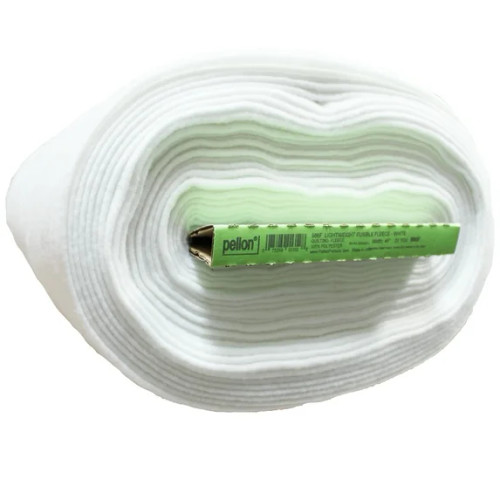


Looking for the perfect balance of stiffness and flexibility? Pellon Flex-Foam is a 100% polyester foam sandwiched between two layers of soft fabric.
The 1-sided fusible version is the 'Goldilocks' of interfacing—it gives you the convenience of an iron-on bond for your exterior fabric while allowing your lining to remain free-floating for a cleaner, professional interior look.
-
One-Sided Fusibility: Easily bond your outer fabric to the foam with a standard iron—no pinning or basted seams required.
-
Superior Shape: Ideal for projects that need to stand up on their own, like tote bags, bins, and backpacks.
-
Protective Padding: Excellent for laptop sleeves, camera bags, and eyeglass cases.
-
Sewing Machine Friendly: Despite its thickness, it is easy to quilt and sew through without gumming up your needle.
Product Highlights:
-
Material: 100% Polyester
-
Type: Single-sided fusible foam stabilizer
-
Width: Width: 20" (Sold by the yard; multiple yards will be cut as one continuous piece)
-
Best For: Handbags, tablet sleeves, wine totes, and padded hat brims.
-
Care: Machine wash warm, tumble dry low, or dry clean.
How to Use Pellon Flex-Foam (1-Sided Fusible)
1. Preparation
-
Identify the Fusible Side: Feel the foam; the side with the adhesive will feel slightly rougher or "bumpy" compared to the soft, smooth side.
-
Pre-Test: Always test a small scrap of foam with a scrap of your project fabric to ensure the heat setting is correct and the bond is secure.
2. Positioning
-
Place the fusible (rough) side of the Flex-Foam against the wrong side of your fabric.
-
Make sure your fabric is smoothed out to avoid fusing permanent wrinkles into the project.
3. Fusing (The Damp Cloth Method)
-
Set your iron: Use a Wool/Steam setting.
-
Cover: Place a damp press cloth over the fabric side. (A damp cloth helps transfer heat deeply into the foam without scorching the fabric).
-
Press: Press the iron down firmly for 10 seconds. Do not "iron" or slide the iron back and forth; instead, lift and move the iron to the next spot, slightly overlapping the previous area.
-
Check the Bond: Let the piece cool completely before moving it. Once cool, check the edges to ensure it is fully adhered.
4. Sewing Tips
-
Needle Choice: Use a 90/14 or 100/16 needle (Topstitch or Denim needles work great) to pierce through the foam layers cleanly.
-
Bulk Management: If your seams feel too thick, you can trim the foam out of the seam allowance after fusing, or "grade" your seams to help the project lay flat.
-
Walking Foot: Using a walking foot on your sewing machine will help feed the thick foam through evenly without shifting.
**Price is per yard. Please note: Fabrics and interfacings sold by the yard are non-returnable**